
Renting duct cleaning equipment delivers professional-grade HVAC maintenance results without the capital investment, and choosing the right machine depends on project scope, duct material, and ventilation system size. For Canadian contractors managing commercial buildings, multi-residential properties, or renovation projects, understanding the difference between portable systems and truck-mounted units ensures you select equipment that matches your client’s needs while staying on budget.
The decision to rent vs use your own duct cleaning systems often comes down to project frequency. Contractors working on occasional maintenance contracts or seasonal air quality remediation benefit from rental flexibility, accessing commercial-grade vacuum systems, rotary brush tools, and air whips without warehouse storage or maintenance overhead. Rental packages typically include the complete system: negative air machines rated between 3,000 and 16,000 CFM, brush heads sized for residential through industrial applications, HEPA filtration units, and inspection cameras.
Equipment selection matters because duct systems vary significantly. Flexible residential ducts require gentler cleaning approaches than rigid commercial sheet metal, and contamination levels dictate whether you need basic agitation tools or specialized remediation equipment. Safety training becomes critical when operating high-CFM vacuum systems in occupied buildings, where proper containment procedures protect indoor air quality during cleaning operations.
This guide walks you through equipment types available for rent in 2026, project-specific recommendations based on building class and duct configuration, selection criteria that prevent underpowered equipment choices, and common rental mistakes that delay timelines or compromise cleaning effectiveness. Whether you’re bidding your first commercial HVAC maintenance contract or expanding service offerings, understanding rental options helps you deliver professional results with full supplier support backing each project.
What to Look for in Duct Cleaning Equipment Rentals
Selecting the right duct cleaning equipment rental starts with understanding your project’s specific demands. A portable vacuum suitable for a residential job won’t have the capacity for a 50,000-square-foot commercial building, and choosing the wrong machine wastes time and money.
Power and suction capacity form the foundation of equipment selection. Measured in cubic feet per minute (CFM), this rating determines how effectively a machine removes debris from ductwork. Residential systems typically require 3,000 to 5,000 CFM, while commercial applications often need 8,000 CFM or higher. Check that the rental unit’s power requirements match your job site’s electrical capacity, running a 240-volt machine on a 120-volt circuit creates safety hazards and equipment failure.
Filtration quality protects both workers and building occupants. HEPA filtration captures 99.97% of particles down to 0.3 microns, meeting health and safety standards for most commercial contracts. Verify that the rental equipment includes certified HEPA filters, not just standard bag filters that allow fine particulates to escape back into the air.
Hose specifications directly affect cleaning efficiency. Length determines reach without repositioning the vacuum unit, 100 feet works for most residential jobs, but commercial projects may need 200 feet or more to avoid constant relocation. Diameter matters too: 8-inch hoses handle heavier debris loads than 6-inch versions, though they’re less maneuverable in tight mechanical rooms.
Portability considerations extend beyond weight. A 400-pound unit on wheels sounds manageable until you face three flights of stairs or a narrow basement door. Assess your access points beforehand. Some contractors prefer breaking the job into smaller sections with lighter equipment rather than wrestling a powerful but unwieldy machine through difficult spaces.
Duct system compatibility requires matching the rental equipment’s capabilities to the building’s existing infrastructure. Older systems with flexible ductwork need gentler agitation methods than modern metal ducts. Round versus rectangular ductwork affects which brush heads and accessories you’ll need alongside the primary vacuum unit.
Types of Duct Cleaning Machines Available for Rent
Portable Vacuum Collection Systems
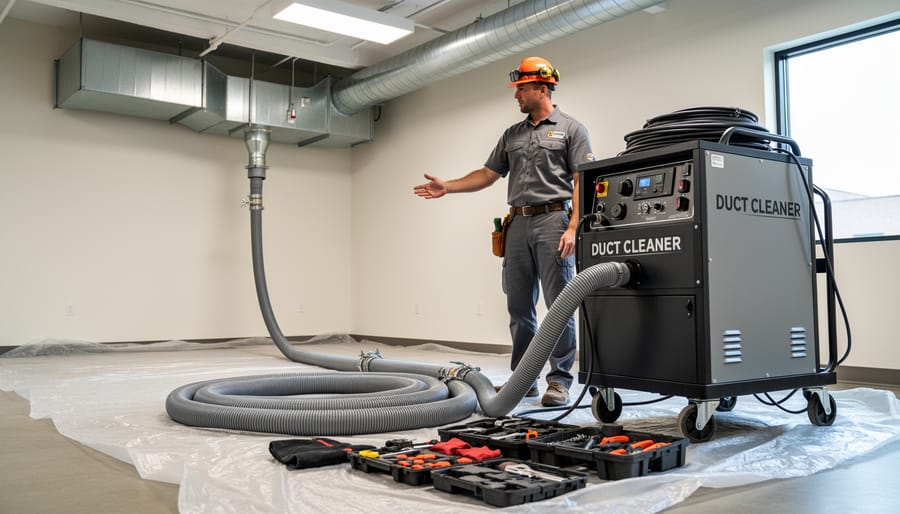
Portable vacuum collection systems are the workhorses for residential and light commercial duct cleaning, offering contractors a balance of power and maneuverability that truck-mounted units can’t match in tight spaces. These standalone machines typically deliver between 3,000 and 6,000 CFM, which is sufficient for most homes and small office buildings with standard ductwork configurations.
The defining feature of quality portable units is HEPA filtration, look for systems certified to capture 99.97% of particles at 0.3 microns. This filtration level protects indoor air quality during cleaning and meets regulatory requirements for healthcare facilities and sensitive environments. Entry-level models may use standard bag filters, but they lack the containment needed for mold remediation or asbestos abatement work.
Portability comes with trade-offs. While these units fit through doorways and navigate stairs easily, they require electrical connections at the job site and typically handle duct runs up to 100 feet effectively. Beyond that distance, suction power drops noticeably, making them less suitable for sprawling commercial buildings or multi-story applications.
Truck-Mounted Duct Cleaning Units
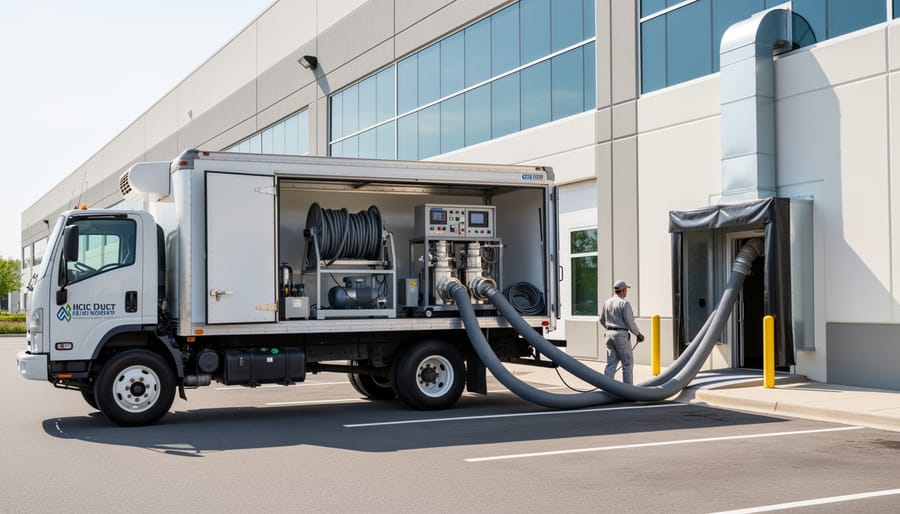
Truck-mounted duct cleaning units deliver significantly more suction power than portable systems, typically ranging from 15,000 to 20,000 CFM. These heavy-duty machines mount directly to service vehicles, drawing power from dedicated engines rather than standard electrical outlets. The higher airflow capacity makes them essential for large commercial buildings, multi-story office complexes, and industrial facilities where ductwork spans extensive areas and accumulates heavier debris.
The main advantage lies in sustained vacuum pressure throughout long cleaning sessions without performance degradation. Truck-mounted systems handle larger-diameter commercial ducts more effectively and can maintain negative pressure across entire building HVAC systems simultaneously. However, they require specialized vehicles, limit job site mobility once positioned, and demand higher rental rates. For projects involving 10,000+ square feet of ductwork or multi-level commercial buildings, truck-mounted units provide the consistent power needed to complete thorough cleaning without multiple equipment setups.
Agitation and Compressed Air Tools
Agitation tools work alongside vacuum systems to physically break loose the accumulated dust, debris, and contaminants clinging to duct walls. Without proper agitation, suction alone often leaves behind caked-on material that reduces airflow and harbors allergens.
Rotary brushes attach to flexible shafts and spin through ductwork, scrubbing interior surfaces clean. They come in various diameters to match duct sizes, with nylon bristles for standard cleaning or stiffer options for heavy buildup. Most rental packages include multiple brush heads.
Air whips use compressed air to create aggressive whipping action that dislodges debris in hard-to-reach sections. They’re particularly effective in flexible ducts where brushes might snag.
Skipper balls are rubber projectiles shot through ducts using compressed air. As they bounce along surfaces, they knock loose debris that the vacuum then captures. They work well for long, straight runs where other tools can’t reach effectively.
Inspection and Documentation Equipment
Robotic inspection cameras have transformed how contractors document duct conditions and verify cleaning effectiveness. These systems typically feature pan-and-tilt cameras mounted on wheeled platforms or flexible push cables, allowing operators to navigate through ductwork while recording high-definition video and still images. Most rental units include LED lighting arrays for clear visibility in dark ducts and measurement overlays to document contamination severity or structural issues.
Before starting a cleaning project, inspection equipment helps identify problem areas, locate access points, and provide clients with visual evidence justifying the service. Post-cleaning documentation proves work quality and creates valuable records for building maintenance files. Advanced rental packages often include wireless transmission capabilities, letting contractors show real-time footage to property managers or facility supervisors.
When renting inspection equipment, verify that recording capabilities meet your documentation needs and that cable lengths match your typical duct runs.
Recommended Equipment Configurations for Different Projects
The equipment you need depends on job scale, duct complexity, and site accessibility. Residential HVAC maintenance requires a portable vacuum system rated at 5,000-8,000 CFM with HEPA filtration, paired with rotary brushes for 6-inch to 12-inch ducts and a 50-foot flexible hose kit. This configuration handles most single-family homes and small multi-unit buildings without requiring external power beyond standard 120V outlets.
Commercial building renovations demand truck-mounted units delivering 12,000-16,000 CFM suction capacity. Pair these with pneumatic agitation tools, air whips and skipper balls, to dislodge construction debris from larger-diameter ductwork. Add a robotic inspection camera to document pre-cleaning conditions and verify thoroughness afterward. For buildings with restricted parking, substitute two portable 8,000 CFM units connected in series to achieve comparable performance while maintaining mobility between floors.
Post-construction cleanup presents unique challenges with heavy dust loads and potential debris blockages. Start with a negative air machine rated for the building’s square footage to maintain proper containment during cleaning. Combine this with a high-capacity vacuum system and compressed air tools rated for continuous operation. Include extra HEPA filters in your rental package since construction dust clogs filtration faster than routine maintenance debris. Request 100-foot hose runs to minimize equipment repositioning on larger sites.
Industrial facility maintenance often involves ductwork spanning multiple floors or production areas. Truck-mounted systems with 200-foot hose capacity provide the reach needed without constant relocation. When you choose the right configuration for industrial work, verify that vacuum CFM ratings match or exceed the facility’s exhaust system capacity to prevent pressure imbalances during cleaning.
Consider these equipment packages for common scenarios:
- Residential maintenance: 6,000 CFM portable vacuum, rotary brush set, 50-foot hose kit
- Small commercial: 10,000 CFM truck-mount, air compressor with whips, inspection camera
- Post-construction: Negative air machine, dual portable vacuums, extra HEPA filter set
- Industrial facility: 16,000 CFM truck-mount, 200-foot hose system, pneumatic agitation tools
- Multi-story buildings: Two 8,000 CFM portables, extended hose kits, stair-climbing dolly
Always confirm that your rental includes appropriate adapter fittings for the duct access points you’ll encounter. Mismatched connections waste time and compromise suction efficiency. Rental specialists can recommend accessory packages that address site-specific requirements you might overlook when ordering independently.
Common Mistakes to Avoid When Renting Duct Cleaning Equipment
Selecting the wrong duct cleaning equipment can derail a project timeline and inflate costs. One of the most common mistakes is underestimating power requirements for the job site. Contractors sometimes rent portable units assuming standard 15-amp circuits will suffice, only to discover that commercial-grade vacuum systems require 20-amp or dedicated 240-volt power. Before confirming a rental, verify the electrical infrastructure at your work site matches the equipment’s specifications, and arrange for a generator if necessary.
Another frequent error is neglecting filtration standards, particularly HEPA filtration capabilities. Not all rental units capture the fine particulates and allergens that duct cleaning dislodges, which can create liability issues and fail to meet client expectations for indoor air quality improvements. Ensure the vacuum system you’re renting includes certified HEPA filters capable of capturing particles down to 0.3 microns, especially for healthcare facilities, schools, or residential projects where air quality is paramount.
Hose compatibility issues cause significant delays when contractors arrive on-site. Renting a powerful vacuum unit means nothing if the hoses don’t fit the ductwork dimensions or can’t reach difficult access points. Check that the rental package includes hoses with appropriate diameters for your duct system and sufficient length to cover the building’s layout without constant repositioning.
Perhaps the costliest oversight is skipping operator training for unfamiliar equipment. Complex duct cleaning machines require specific techniques to avoid damaging ductwork or injuring personnel. Reputable rental companies offer training sessions or detailed operational demonstrations, take advantage of these resources rather than learning through trial and error on a client’s property. Proper training prevents equipment misuse, reduces return trips for additional accessories, and keeps your project running smoothly from start to finish.
Rental Terms and What to Expect
Understanding rental terms before you commit helps you budget accurately and avoid unexpected costs. Most equipment rental companies offer flexible periods ranging from daily rates to weekly and monthly options, with longer terms typically reducing your per-day cost. A three-day rental often provides better value than extending a daily rate multiple times.
Delivery and pickup logistics vary by location and order size. Many rental companies provide free delivery within a service radius for orders above a minimum threshold, while remote job sites may incur additional transportation fees. Confirm pickup times in advance, as late returns usually trigger extra charges. Some providers offer after-hours drop-off arrangements for contractors working extended schedules.
Insurance and damage waivers protect both parties. Standard rental agreements hold you responsible for equipment damage or loss during your rental period. Damage waiver options, available for a percentage of the rental fee, transfer this financial risk to the rental company. Review your existing commercial liability coverage before declining waivers, as your policy may already cover rented equipment.
Maintenance responsibilities during rental are straightforward. Rental companies deliver equipment in clean, working condition and handle routine servicing between rentals. You’re expected to perform basic upkeep like emptying collection bins and inspecting hoses for blockages. Report mechanical issues immediately rather than attempting repairs yourself.
Rental packages typically include the main unit, standard hose lengths, and basic accessories like brushes or nozzles. Verify what’s included before pickup to avoid delays. Professional rental companies provide thorough operating instructions and safety guidelines with each machine. Access to knowledgeable supplier support throughout your rental period ensures you can troubleshoot issues quickly and maximize equipment performance on every project.
What to Look For
When evaluating duct cleaning equipment for rent, start by assessing suction power measured in cubic feet per minute (CFM). Residential systems typically require 3,000-5,000 CFM, while commercial projects need 8,000+ CFM to effectively remove debris from larger duct networks. Match the machine’s capacity to your project’s square footage and duct complexity rather than defaulting to the biggest available unit.
Filtration standards directly impact indoor air quality and regulatory compliance. HEPA filtration capturing 99.97% of particles at 0.3 microns meets most health and safety requirements for occupied buildings. Verify the rental unit includes certified HEPA filters and confirm replacement availability before booking.
Hose specifications matter more than many contractors realize. Consider both length (typically 150-300 feet for commercial work) and diameter compatibility with your ductwork. Reinforced hoses withstand the abrasive debris common in post-construction cleaning without collapsing under negative pressure.
Finally, factor in operator requirements and staffing & skills needed to run the equipment safely and efficiently. Some truck-mounted systems require specialized training, while portable units offer simpler operation for crews with basic HVAC experience.
Main Options Compared
When renting duct cleaning equipment, contractors typically choose between three main configurations, each suited to different project scales and environments.
Portable vacuum systems offer the most flexibility for residential and small commercial jobs. These units deliver 3,000 to 6,000 CFM and can navigate tight spaces, staircases, and building interiors without requiring exterior vehicle access. They’re ideal for apartment complexes, retail spaces, and homes where truck access is limited. The trade-off is lower suction power compared to truck-mounted alternatives.
Truck-mounted units provide superior cleaning capacity with 10,000 to 16,000 CFM, making them the standard choice for large commercial buildings, industrial facilities, and multi-story ductwork systems. They eliminate the need to move heavy equipment through occupied spaces, but require exterior parking access and longer hose runs to reach interior work areas.
Hybrid configurations combine portable collection units with supplemental negative air machines for mid-sized projects. This approach balances mobility with enhanced suction, working well for office renovations and multi-unit residential buildings where complete truck-mounted access isn’t feasible but basic portables lack sufficient power.
Frequently Asked Questions About Duct Cleaning Equipment Rentals
How much does it typically cost to rent duct cleaning equipment?
Rental costs vary based on equipment type and project duration, with portable vacuum systems generally ranging from lower daily rates while truck-mounted units command premium pricing. Most rental companies offer discounted weekly and monthly rates that provide better value for extended projects.
Do I need special training to operate rented duct cleaning machines?
While basic portable units are straightforward to use, many rental companies provide operator training as part of their customer support services, particularly for truck-mounted systems and specialized agitation tools. This training covers safe operation, proper hose handling, and filtration system maintenance during your rental period.
What happens if equipment breaks down during my rental?
Professional rental companies typically include maintenance support and will replace malfunctioning equipment at no additional charge, provided the damage wasn’t caused by misuse. Verify the terms of your rental agreement regarding breakdown response times and whether backup equipment is available.
When does renting make more sense than purchasing duct cleaning equipment?
Renting proves more cost-effective when you handle duct cleaning projects occasionally rather than as a core service line, or when you need specialized equipment for a specific job that wouldn’t justify the capital investment. It also eliminates maintenance costs and storage requirements between projects.
How much ductwork can I clean in a day with rented equipment?
Cleaning capacity depends heavily on duct complexity, accessibility, and contamination levels rather than just equipment specifications. A typical residential system might take four to six hours with proper equipment, while large commercial installations could require multiple days even with high-capacity truck-mounted units.
Beyond these common questions, contractors should discuss project-specific concerns directly with rental specialists before committing to equipment. Reputable companies will help you calculate the appropriate machine capacity for your square footage, recommend compatible accessories for your duct configuration, and clarify exactly what’s included in your rental package. Don’t hesitate to ask about delivery logistics, power requirements at your job site, and whether extension hoses or additional filtration components are available if your initial assessment proves inaccurate.
Selecting the right duct cleaning equipment for rent requires careful evaluation of your project’s specific demands. The power capacity, filtration standards, and portability you need depend entirely on whether you’re tackling residential HVAC maintenance, commercial renovations, or large-scale industrial cleaning. Matching the equipment configuration to your duct system type and contamination level ensures efficient work and professional results.
Before finalizing your rental decision, consult with equipment specialists who understand Canadian job site requirements. Professional rental companies provide more than machines, they offer technical guidance on proper setup, safety protocols, and operational best practices. Take advantage of operator training sessions and on-site support to maximize equipment performance and protect your team.
The difference between a successful duct cleaning project and a costly setback often comes down to thorough preparation and expert advice. Rental specialists can help you avoid common configuration mistakes, ensure regulatory compliance, and select accessories that complement your primary equipment. Don’t hesitate to ask detailed questions about power requirements, filtration capabilities, and backup support during your rental period. Your project deserves equipment backed by knowledgeable customer service and comprehensive safety training.