
Provision construction is the systematic planning and coordination of materials, equipment, and resources to ensure availability throughout a project’s lifecycle, preventing costly delays and maintaining workflow continuity. For contractors and project managers, mastering this approach means anticipating needs weeks or months ahead, establishing reliable supply chains, and building contingency plans that keep crews productive regardless of unexpected challenges. The difference between a project that finishes on time and one that stalls often comes down to how well provisions were planned before ground was ever broken.
At its core, effective provision construction relies on three fundamental components: accurate demand forecasting based on project schedules, strategic relationships with suppliers and rental companies, and real-time inventory tracking that flags shortages before they impact the jobsite. Canadian contractors face unique challenges in this area, including seasonal weather disruptions, regional supply variations, and the logistics of servicing remote sites across vast distances.
The financial impact is substantial. Projects with poor provision planning typically experience 15-20% cost overruns due to expedited shipping, idle labor, and equipment downtime. Conversely, teams that implement structured provision strategies report measurably improved efficiency, reduced waste, and stronger relationships with trades who can rely on material availability.
Equipment rental plays a critical role in modern provision construction. Rather than tying up capital in owned assets that may sit idle between projects, strategic rental agreements provide flexibility to scale resources up or down as project phases demand. This approach requires advance coordination with rental partners who understand your timeline, offer delivery scheduling, and provide the safety training your crews need to operate specialized machinery confidently.
What Provision Construction Really Means for Your Project
Provision construction is the systematic approach to forecasting, sourcing, scheduling, and delivering every material, tool, and piece of equipment your project needs, before your crews are standing idle waiting for them. It’s the difference between a site supervisor scrambling to find a concrete pump on the morning of a pour and having that equipment reserved, delivered, and operational a day ahead. This isn’t about reacting to shortages; it’s about anticipating requirements weeks or months in advance, coordinating deliveries with your construction schedule, and building contingency plans for when the unexpected happens.
The process touches every phase of your project. During preconstruction, provision construction means analyzing your drawings and specs to determine exactly what materials you’ll need and when. A residential framing crew might need dimensional lumber delivered in stages to match their work sequence, not dumped on site all at once where it risks weather damage or theft. For commercial projects, it means coordinating multiple trades so electrical supplies arrive after rough-in walls are up but before drywall crews start closing things in.
Effective provision construction also accounts for Canadian realities that generic project management doesn’t address. You’re planning around winter weather windows, remote site access that limits delivery options, and supply chains that can be disrupted by everything from border delays to seasonal demand spikes. When you book a scissor lift for interior work three months out, you’re doing provision construction. When you establish backup supplier relationships before your primary vendor runs short on rebar, you’re practicing provision construction. It’s project management focused specifically on the flow of physical resources, ensuring nothing stops because something’s missing.
The Core Components of Effective Construction Supplies Provision
Materials Forecasting and Inventory Planning
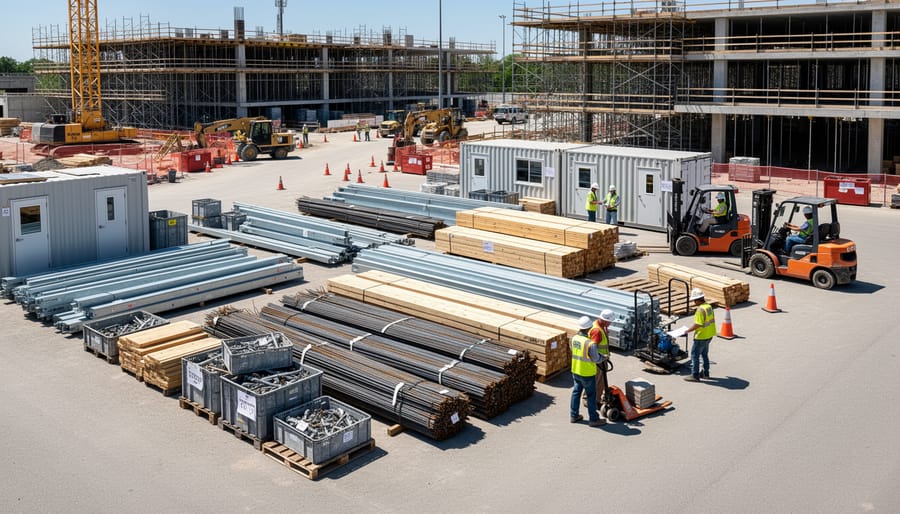
Accurate materials forecasting starts with breaking your project into phases and calculating quantities for each stage rather than ordering everything upfront. Review your project drawings and specifications to determine exact material needs for foundation work, framing, mechanical systems, and finishing, then add a reasonable buffer (typically 5-10%) for waste and adjustments without overbuying.
Schedule deliveries to arrive just before each phase begins, not weeks in advance. This approach minimizes on-site storage needs, reduces theft and damage risks, and preserves working capital. For a commercial build in Ontario, you might schedule concrete deliveries two days before pours, framing lumber a week before that phase starts, and finishing materials only after mechanical rough-ins are complete.
Canadian weather patterns demand special attention in your forecasting timeline. Plan material deliveries around seasonal constraints, order and store sensitive materials like drywall before spring thaw creates muddy site access, and schedule exterior work supplies to arrive during dry periods. Winter projects require heated storage for certain materials and earlier lead times since suppliers often face weather-related shipping delays.
Track actual usage against your forecasts throughout the project and adjust future orders accordingly. If your framing crew consistently uses 8% more lumber than estimated, factor that pattern into remaining phase calculations. This ongoing refinement prevents the costly cycle of rush orders and production delays that plague projects with poor inventory planning.
Equipment Rental Coordination
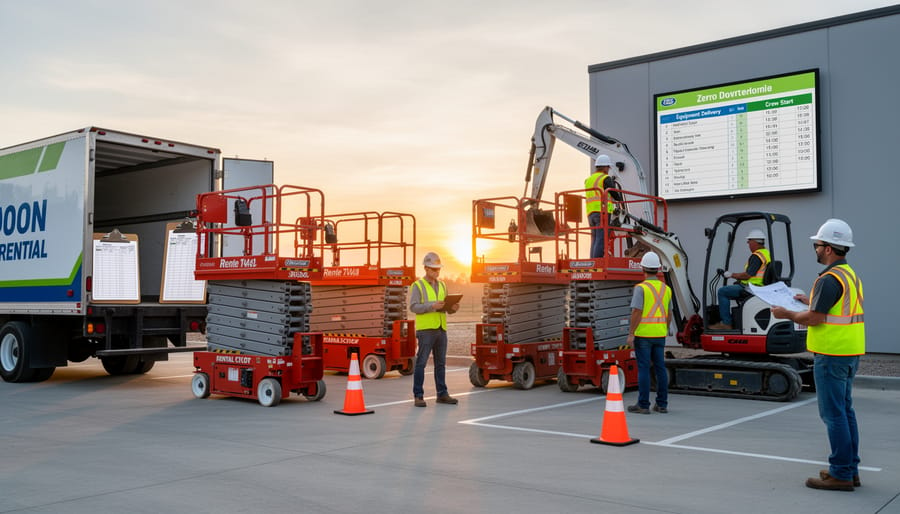
Timing heavy equipment rentals to align with your project schedule is central to effective provision construction. Instead of securing all equipment at project start, coordinate deliveries so aerial lifts arrive when interior work begins, excavators show up during foundation phases, and compaction equipment appears exactly when backfilling starts. This precision prevents paying rental fees while machines sit idle on your laydown yard, which can drain thousands from your budget on longer builds.
Planning for rental reliability matters most during peak construction seasons, typically May through September across Canada, when equipment availability tightens considerably. Book your rentals at least three to four weeks ahead during these months, particularly for specialized machines like articulating boom lifts or large excavators that rental fleets stock in limited quantities. Waiting until the week you need equipment often means settling for undersized alternatives or paying rush premiums.
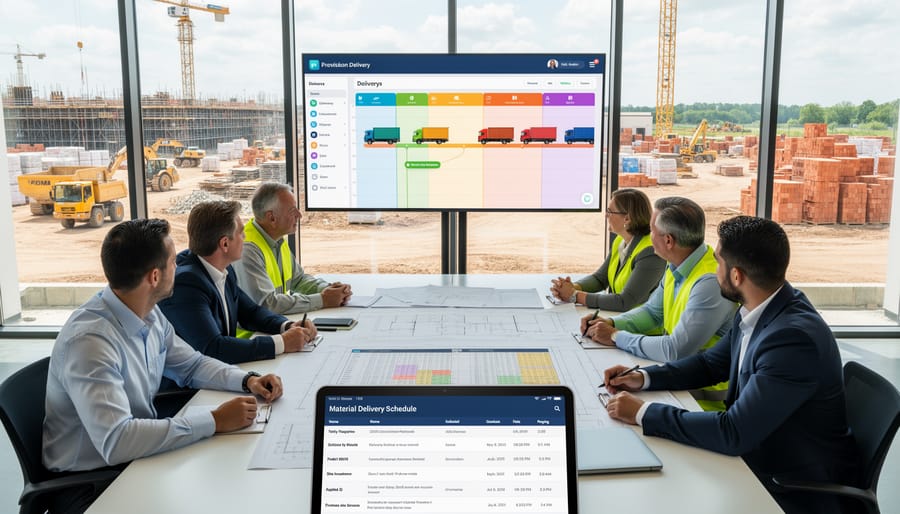
Work with your rental company to map out equipment needs against your construction schedule during pre-construction planning. Discuss which phases require when to use each type of machine, confirm lead times for delivery, and establish clear return dates. Many rental partners will hold equipment for confirmed future dates without charging upfront, securing your access while you complete earlier phases. Build buffer time into your rental windows, weather delays happen, and extending a rental is simpler than rebooking equipment that another contractor has claimed.
Supplier Relationship Management
Strong supplier relationships form the backbone of reliable provision construction. Contractors who treat vendors as partners rather than interchangeable order-takers consistently experience fewer supply disruptions and faster problem resolution when issues arise.
Start by identifying suppliers and rental companies with proven track records on projects similar to yours. Look beyond price, evaluate their delivery reliability, responsiveness during previous supply chain disruptions, and willingness to accommodate schedule changes. A supplier who answers calls promptly and adjusts orders without bureaucratic delays is worth considerably more than one who simply offers the lowest initial quote.
Establish clear communication protocols from the outset. Provide suppliers with your full project timeline, not just immediate needs, so they can anticipate upcoming orders and flag potential availability issues weeks in advance. Schedule regular check-ins, weekly for major suppliers during active construction phases, to confirm delivery dates and discuss any project changes affecting material quantities or timing.
Develop backup supplier networks before you need them. Identify at least two alternative sources for critical materials and equipment, particularly items with long lead times or seasonal availability constraints. Pre-qualify these backup vendors so you’re not scrambling to verify capabilities during an emergency.
Document everything. Keep records of delivery performance, quality issues, and how suppliers handled problems. This data helps you refine your vendor relationships over time and provides leverage when negotiating terms on future projects. Suppliers who consistently meet commitments earn more of your business and become integral parts of your provision construction strategy.
On-Site Storage and Logistics
Once materials arrive, the physical reality of provision construction becomes immediately apparent. A site with poor storage planning quickly turns chaotic, crews waste time hunting for materials, deliveries block active work zones, and weather-exposed supplies deteriorate before installation.
Smart laydown yard organization starts with zoning. Designate specific areas for different material types and phases: framing lumber separate from finishing materials, electrical supplies away from plumbing fixtures. Label zones clearly and maintain an updated site map that shows what’s stored where. This system saves crews from wandering the site searching for what they need.
Delivery scheduling matters as much as what you order. Coordinate arrivals so materials show up just before installation rather than weeks early. Stagger large deliveries across multiple days to prevent gridlock at the site entrance. For urban projects where every square meter counts, consider off-site storage with daily shuttle deliveries of exactly what’s needed that day.
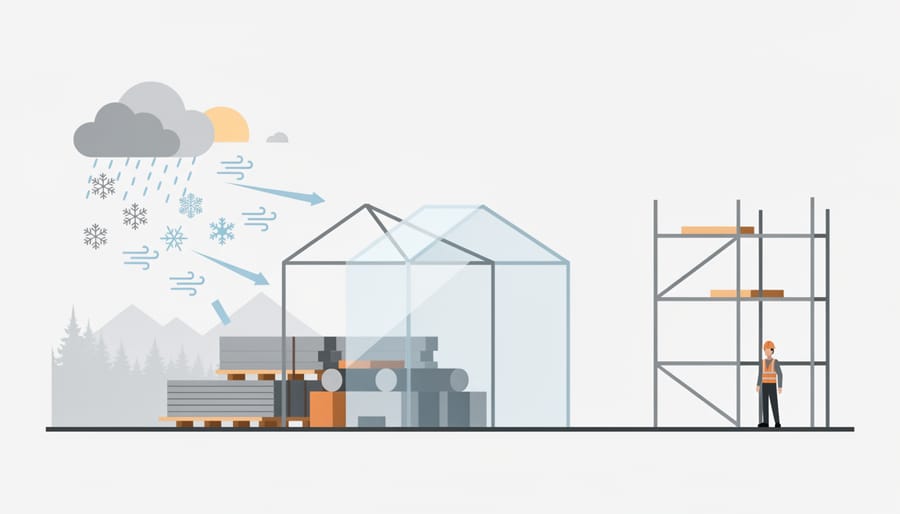
Weather protection can’t be an afterthought in Canadian climates. Tarps and temporary shelters protect moisture-sensitive materials like drywall and insulation. Stack materials on pallets or blocking to keep them off wet ground. For winter projects, heated containers prevent freeze damage to paints, adhesives, and certain equipment hydraulics.
Urban sites demand creative solutions. Vertical storage racks maximize limited footprint. Negotiate with neighboring properties for temporary laydown space. Use shipping containers as secure, weatherproof mini-warehouses that can be relocated as the project phases shift. The tighter your site, the more critical precise delivery timing becomes, there’s simply no room for error or excess inventory.
Common Provision Construction Challenges Canadian Contractors Face
Canadian contractors face distinct provision construction obstacles that can derail even well-planned projects. Understanding these challenges helps you build resilience into your supply strategies before problems emerge on site.
Weather presents the most unpredictable variable in Canadian construction provision. Winter conditions across much of the country compress building seasons into tight windows, creating demand surges that strain supplier capacity. Spring thaw can make rural access roads impassable for weeks, stranding materials at distribution centres while crews wait idle. Summer wildfires occasionally force evacuation orders that halt deliveries mid-project. Smart contractors factor weather buffers into their provision timelines and maintain relationships with suppliers who stock adequate winter inventory.
Supply chain disruptions have become more frequent and severe. Manufacturing delays, transportation bottlenecks, and material shortages ripple through the construction sector with little warning. A specialty fastener backorder or delayed concrete additive shipment can cascade into costly schedule slips. The challenge intensifies for projects in smaller markets where suppliers maintain minimal local stock and rely on just-in-time deliveries from central warehouses.
| Challenge | Typical Project Impact | Prevention Strategy |
|---|---|---|
| Weather delays | 2-4 week schedule slips, crew downtime costs | Build seasonal buffers, secure covered storage, maintain flexible supplier agreements |
| Supply chain disruptions | Project holds, premium rush shipping costs, substitute material compromises | Order critical items early, identify alternative suppliers, stock contingency inventory |
| Remote site access | Delivery refusals, damaged materials, 30-50% cost premiums | Coordinate bulk deliveries, arrange specialized transport, establish staging areas |
| Multi-trade coordination | Site congestion, damaged materials, rework from sequencing errors | Create shared delivery schedules, designate trade-specific storage zones, hold coordination meetings |
Remote site access compounds provision difficulties in northern and rural projects. Standard delivery trucks refuse unpaved roads or require expensive escorts. Materials arrive damaged from rough transport, and return policies become murky when items travel hundreds of kilometres. Equipment rental companies may charge substantial premiums or simply decline service to isolated locations, forcing you to purchase rather than rent.
Coordinating provision across multiple trades creates logistical headaches on complex projects. Electrical, plumbing, HVAC, and framing contractors each order materials on different schedules, leading to delivery bottlenecks where five trucks arrive simultaneously at a site with limited unloading space. Materials get damaged, misplaced, or installed out of sequence because nobody tracked what arrived when.
Poor provision planning transforms these challenges from manageable obstacles into project killers. Without advance coordination, you’re stuck paying premium prices for rush deliveries, accepting whatever substitutes suppliers have available, and watching crews stand idle while waiting for basic materials.
Building a Provision Construction Plan That Actually Works
Pre-Construction Planning Phase
The pre-construction planning phase sets the foundation for reliable supplies provision throughout your project. Start by conducting a thorough supply assessment based on your drawings and specifications. Break down every material and equipment requirement by project phase, what you need for site prep differs dramatically from finishing work. This granular approach prevents last-minute scrambles and identifies long-lead items that require early ordering.
Vendor prequalification comes next. Don’t wait until you need something to find out if a supplier can deliver. Evaluate potential vendors on delivery reliability, geographic coverage across your Canadian work areas, and their capacity to handle your project volume. Request references from contractors who’ve worked with them on similar-scale projects. Establish backup suppliers for critical materials, supply chain disruptions happen, and having alternatives prevents work stoppages.
Create a detailed procurement schedule that maps every delivery to your construction timeline. If framing starts week four, schedule lumber delivery for week three to account for inspection and weather delays without paying for extended storage. Coordinate equipment rental bookings with actual usage dates, not hopeful projections. Peak construction season in Canada means popular equipment books up fast, reserve aerial lifts and excavators months in advance for summer projects.
Early planning delivers tangible cost benefits. Suppliers offer better pricing when they can schedule deliveries efficiently rather than rushing emergency orders. You’ll secure equipment availability when competitors are scrambling, and avoid premium rates for last-minute rentals.
Active Project Management and Adjustments
Once work begins, your provision construction plan needs constant attention and flexibility. Daily walkthroughs should verify that materials match current needs and upcoming tasks, catching shortfalls three days early beats scrambling when crews arrive at an empty staging area. Keep a running tally of high-use consumables like fasteners and sealants, reordering when inventory hits predetermined thresholds rather than waiting until boxes run dry.
Change orders immediately trigger provision adjustments. When scope expands or design details shift, recalculate material quantities and update delivery schedules before the revised work starts. Loop in your suppliers the same day approvals come through, lead times don’t shrink just because plans changed. If a change demands specialized equipment you didn’t anticipate, knowing what you can rent right now keeps the project moving while you arrange longer-term solutions.
Maintain a shared tracking system that project managers, foremen, and suppliers can access. Log every delivery against your schedule, flag discrepancies immediately, and document conversations about delayed shipments. When a supplier reports a delay, don’t just accept a vague “soon”, pin down the revised date, explore alternate sources, and adjust task sequences if necessary to keep other trades productive.
Weekly check-ins with key suppliers prevent small issues from becoming site shutdowns. A quick call often reveals potential problems your vendor hasn’t formally reported yet, giving you time to pivot before delays hit.
Closeout and Lessons Learned
After wrapping up a project, take time to document your provision construction outcomes while details are fresh. Record which suppliers delivered on time, where material estimates were accurate, and what caused delays or overages. This review creates a reference for future bids and helps refine your forecasting skills.
Return rental equipment promptly to avoid extra charges. Inspect items for damage before pickup and document their condition with photos. Coordinate return schedules with your rental company to avoid weekend or holiday rate extensions.
For excess materials, evaluate what can be returned for credit, stored for upcoming projects, or sold to recoup costs. Dispose of waste properly according to local regulations. Many suppliers accept unopened materials for partial refunds if you’ve maintained good purchasing relationships.
Create a simple provision report noting actual costs versus estimates, delivery issues encountered, and adjustments made mid-project. Share findings with your procurement team so each project improves your provision construction process and strengthens supplier partnerships.
How Equipment Rental Companies Support Your Provision Strategy
Reliable rental partners do more than deliver machines, they become extensions of your provision construction strategy. When you work with a comprehensive equipment rental company, you gain access to flexible rental terms that adapt to your project timeline rather than forcing you into rigid contracts. Need a boom lift for three weeks but discover you’ll finish early? Quality rental companies adjust terms without penalties, keeping your provision plan responsive to actual site conditions.
Technical support separates adequate rental services from exceptional ones. Skilled mechanics who understand Canadian construction demands provide preventive maintenance, rapid repairs, and on-site troubleshooting that prevents equipment failures from derailing your provision schedule. When a compactor stops working mid-project, having a rental partner with fast-response technicians means hours of downtime instead of days waiting for replacement units.
Just-in-time delivery capabilities reduce your storage burden significantly. Rather than coordinating multiple suppliers and managing a crowded laydown yard, rental companies can stage equipment off-site and deliver exactly when your crew needs it. This approach proves particularly valuable on urban job sites where space costs money and congestion slows productivity.
Comprehensive rental companies simplify provision construction by serving as a single point of contact for diverse equipment needs. Instead of managing relationships with separate vendors for aerial lifts, compaction equipment, and power tools, you coordinate everything through one trusted partner who understands your entire project scope. This consolidation streamlines communication, reduces administrative overhead, and ensures compatible equipment for each phase arrives without compatibility issues.
The best rental partnerships include operator training, safety briefings, and documentation that keeps your crews compliant and productive from day one. When provision construction accounts for these support services upfront, you eliminate the gaps that cause delays and ensure every piece of equipment contributes immediately to project progress.
Safety and Training Considerations in Provision Construction
Effective provision construction extends beyond ensuring materials arrive on time, it requires planning for the safe handling, storage, and operation of everything that comes to your site. When you order equipment or materials without coordinating the necessary safety measures, you create hazards that can halt work just as effectively as a missing delivery. Your provision strategy must include safety equipment like personal protective gear, fire extinguishers, and spill containment systems that arrive before the materials they’re meant to protect. Planning storage locations that prevent trip hazards, load collapses, or weather exposure protects both your workforce and your investment in materials.
Training coordination represents one of the most overlooked aspects of construction supplies provision. Renting specialized equipment without ensuring operators receive proper certification creates liability and productivity losses. Before scheduling delivery of aerial lifts, compactors, or unfamiliar machinery, confirm that your crew has completed manufacturer-recommended training or arrange for on-site instruction from your rental partner.
Many rental companies provide technical support and safety training as part of their customer service commitment, but this requires advance notice in your provision timeline.
Material safety data sheets must arrive with chemical products, and proper ventilation or containment systems need to be in place before hazardous materials reach the site. When you choose the right machine for each task, factor in not just capability but also the safety protocols and operator qualifications required. Document all training completion and equipment inspections as part of your provision records, this protects your crew and demonstrates due diligence if incidents occur.
Mastering provision construction separates contractors who consistently deliver on time from those scrambling to explain delays. When you control the flow of materials and equipment to your job sites, you control your project outcomes. The difference shows up immediately in your bottom line, fewer crew hours wasted waiting for deliveries, reduced rental costs from precise equipment scheduling, and eliminated emergency orders at premium prices.
Canadian contractors face unique challenges that make provision construction even more critical. Weather windows are shorter, supply chains stretch longer distances, and remote sites demand flawless coordination. Your ability to forecast needs accurately, secure reliable supplier partnerships, and maintain flexible backup plans determines whether winter projects stay on schedule or bleed money through delays.
The contractors who thrive treat provision construction as a core competency, not an afterthought. They build relationships with equipment rental companies that understand project timelines and provide responsive customer support when plans change. They document what works and refine their processes after every project. This systematic approach compounds over time, each job runs smoother than the last because you have learned exactly how to provision efficiently for your specific types of work.
Start treating construction supplies provision as the strategic advantage it is. Plan further ahead than feels comfortable, communicate relentlessly with your suppliers and rental partners, and invest time in the unsexy logistics work that keeps sites running. Your crews, your clients, and your profit margins will reflect that commitment.