
Responsible online casino play in Canada means setting clear deposit and time limits before you begin, using self-exclusion tools when needed, and knowing where to turn for support if gaming stops being entertainment. Visit Now to explore platforms that prioritize player protection alongside entertainment. Provincial regulations require licensed operators to provide reality checks, session timers, and loss limits, but the most effective safeguard remains your own commitment to treating gambling as leisure, not income.
The framework for responsible gaming in Canada combines regulatory oversight, operator-provided controls, and personal accountability. Each province enforces specific requirements for licensed casinos, from mandatory cooling-off periods to prominent display of problem gambling resources. Modern platforms integrate tools that track your spending in real time, send alerts when you approach preset thresholds, and allow immediate self-imposed restrictions ranging from 24-hour breaks to permanent exclusions.
Understanding how to use these controls effectively requires more than awareness. It demands a practical strategy built on honest self-assessment, clear financial boundaries, and recognition of early warning signs. This guide walks you through the complete process: evaluating your gaming habits, configuring platform controls, implementing personal limits, and accessing professional support networks across Canada when patterns shift from recreation to risk.
Understanding Responsible Gaming in the Canadian Context
Responsible gaming means playing online casino games in a way that stays within your control, keeping it entertainment, not a source of stress or financial harm. In Canada, this approach is built into the legal framework: provincial regulators, federal laws, and licensed operators all share responsibility for creating an environment where players can enjoy casino games safely and make informed choices about their participation.
At the federal level, the Criminal Code permits provinces to regulate and license online gambling within their borders. Each province approaches this differently, some operate their own platforms, while others license private operators, but all require strict player protections. Licensed sites must verify player age, provide access to self-exclusion programs, display responsible gaming information clearly, and offer tools to control spending and session length.
Provincial regulators monitor compliance and enforce standards. For example, operators must make it easy to set deposit limits before you start playing, not bury the option in settings. They are required to train staff to recognize problem gambling signs and provide resources for players who need help. This regulatory oversight ensures that responsible gaming isn’t just a suggestion, it’s a legal obligation for anyone offering online casino services in Canada.
Operators also contribute by designing their platforms with player safety in mind. Reality checks that remind you how long you’ve been playing, mandatory cooling-off periods after closing an account, and links to provincial helplines are standard features on licensed Canadian sites. These measures work together to keep gambling within healthy boundaries, but the most important element remains your own awareness and willingness to use the tools available.

Provincial Regulations and Operator Requirements
In Canada, online casino regulation falls primarily under provincial jurisdiction, meaning each province sets its own rules for licensing and oversight. This decentralized approach creates a regulatory framework where provinces determine which operators can legally serve their residents and what standards those operators must meet. Several provinces, including Ontario, British Columbia, Quebec, and Atlantic Canada, have established formal licensing regimes that require operators to comply with strict responsible gaming requirements before they can accept players.
Licensed operators must implement mandatory age verification at registration. This typically involves checking government-issued identification and cross-referencing databases to confirm players are at least 19 years old (18 in Quebec and Alberta). Verification happens before any real-money play is allowed, creating the first barrier against underage gambling.
Beyond age checks, provincial regulators require operators to provide a suite of responsible gaming tools directly accessible in player accounts. These include deposit limits, session time limits, loss limits, and reality checks that remind players how long they’ve been active. Operators must make these tools easy to find and apply, usually within account settings, and must honor limit reductions immediately while allowing increases only after a cooling-off period of 24 to 72 hours. This delay prevents impulsive decisions during active play.
Self-exclusion programs are another non-negotiable requirement. Operators must offer players the ability to block themselves from accessing their accounts for defined periods, ranging from months to permanent exclusion. During exclusion, the operator must prevent all login attempts, block promotional communications, and return any remaining account balance. Some provinces maintain centralized self-exclusion registries that share information across multiple licensed sites, providing broader protection.
Regulators enforce these requirements through regular audits, compliance checks, and penalties for violations. This oversight ensures operators don’t just offer responsible gaming tools as a formality but integrate them meaningfully into the player experience, creating a safer environment where protection measures work alongside entertainment.
Setting Personal Limits and Boundaries
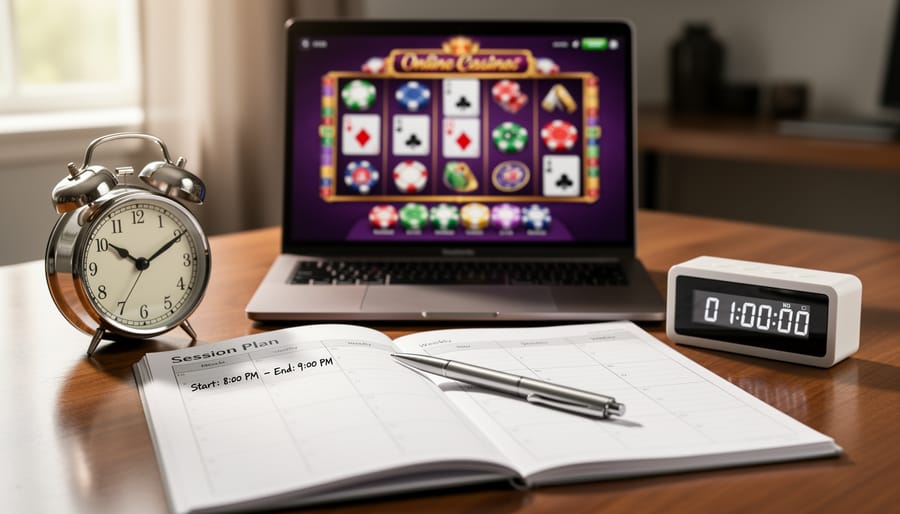
Setting personal limits is the foundation of responsible online casino play. Licensed Canadian operators provide built-in tools that let you control your spending, time, and risk before you start playing. These limits work best when you establish them proactively, during a calm moment rather than in the heat of a session.
Deposit Limits cap how much money you can add to your account over a day, week, or month. Set these based on your discretionary income, money you can afford to lose without affecting rent, bills, or savings. Most platforms let you adjust limits downward immediately, but increases typically require a waiting period (often 24 to 72 hours) to prevent impulsive decisions.
Loss Limits define the maximum amount you can lose in a given period. Once you hit this threshold, the system blocks further play until the period resets. This tool protects you from chasing losses, a common pattern that escalates quickly. Pair loss limits with deposit limits for comprehensive control.
Session Time Limits remind you or force a logout after a set duration. Online casino play can distort time perception, and these alerts help you set boundaries around how long you engage. Even a 90-minute cap can prevent marathon sessions that drain focus and funds.
Wager Limits control the size of individual bets. If you tend to increase stakes when frustrated, a wager ceiling keeps each bet within a predetermined range, reducing the risk of rapid losses.
To use tools safely access your account settings (usually under “Responsible Gaming” or “Account Limits”) and configure all four limit types before making your first deposit. Review them monthly or whenever your financial situation changes. Licensed operators enforce these limits at the system level, so they work even when your resolve weakens. Treat limits as non-negotiable guardrails, not suggestions, they exist to keep play recreational and within your means.
Self-Assessment and Recognizing Problem Gaming
Self-assessment is your first line of defence in maintaining control over your online casino activity. Regular check-ins help you spot warning signs before small habits become larger problems. Set aside time each month to review your gaming behavior honestly: Are you playing more frequently than you planned? Have deposit amounts crept upward without a clear decision on your part? Does the thought of not playing create anxiety or restlessness?
Warning signs of problem gaming include chasing losses, continuing to play in an attempt to recover money you’ve lost, which often leads to deeper financial trouble. Hiding your activity from family or friends, lying about time or money spent, or feeling defensive when someone asks about your gambling are red flags. Neglecting responsibilities at work, home, or in relationships because of gaming, or using casino play as an escape from stress or sadness, signals that gambling may be serving an unhealthy role in your life.
Just as you know the risks in other areas where safety and awareness matter, recognizing gambling risks requires the same honest attention. If you find yourself playing with money earmarked for bills, borrowing to fund gaming, or feeling unable to stop even when you want to, it’s time to seek help. Licensed Canadian operators provide self-assessment tools, short questionnaires that gauge risk, and these can offer an objective snapshot of where you stand. Act on what you discover: adjust your limits, take a break, or reach out to a support resource before the problem escalates.
Self-Exclusion Programs and Cooling-Off Periods
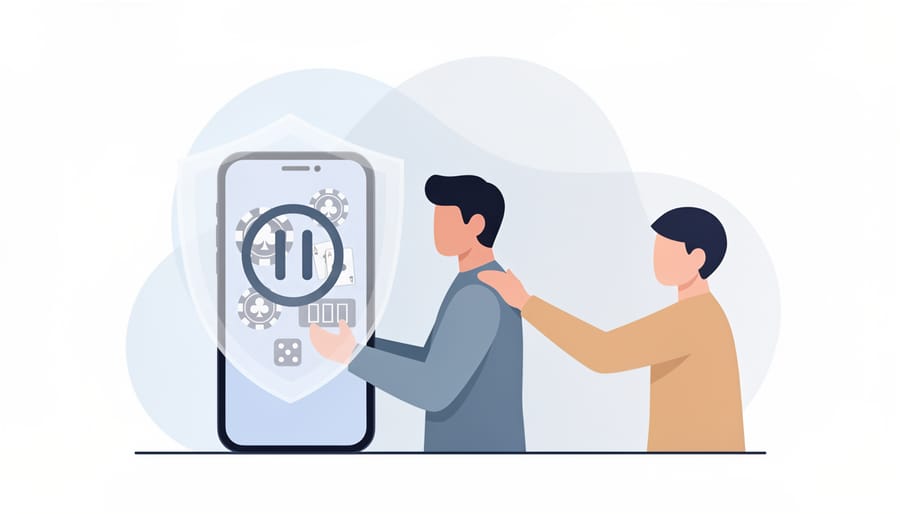
Self-exclusion programs give Canadian players a formal way to stop gambling when they recognize it has become a problem. These programs work by blocking your access to casino accounts for a set period, ranging from short cooling-off breaks to permanent bans, and are available through both individual operators and provincial registries.
A cooling-off period typically lasts 24 hours to several months. During this time, you can’t log in to your account, deposit funds, or participate in any casino activity. Most licensed operators in Canada offer cooling-off options directly through your account settings or customer support. Once the period expires, you can resume play if you choose. This temporary pause helps you step back, reassess your habits, and regain control without making a long-term commitment.
Permanent self-exclusion is a more serious step. When you enroll, you’re banned from the casino indefinitely, often for a minimum of six months to a year, with the option to extend. Reversing a permanent exclusion is intentionally difficult: it usually requires a waiting period, written requests, and sometimes counseling verification to ensure you’re ready to return responsibly.
Provincial self-exclusion registries take this further. Provinces like Ontario and British Columbia maintain centralized databases where you can register yourself across multiple licensed operators at once. When you join a provincial registry, every participating casino receives your information and must block your account. This prevents you from simply switching sites to continue gambling.
To enroll, visit your operator’s responsible gaming page or contact your provincial regulator directly. You’ll provide personal details, choose your exclusion length, and confirm your decision. Once active, the operator must prevent you from accessing your account and may return any remaining balance according to their policy.
Support Resources and Where to Get Help
If you recognize signs of problem gambling or feel your online casino play is affecting your well-being, reaching out for support is a responsible and proactive choice. Canada offers multiple resources designed to help players regain control, understand their behavior, and access professional guidance. Provincial helplines, counseling services, and national organizations provide confidential support tailored to your needs.
| Organization | Contact Method | Services Offered |
|---|---|---|
| ConnexOntario (Ontario) | 1-866-531-2600 or online chat | 24/7 helpline, referrals to counseling, treatment programs |
| Jeu: aide et référence (Quebec) | 1-800-461-0140 | Bilingual helpline, support groups, family counseling |
| Alberta Health Services, Addiction Helpline | 1-866-332-2322 | Crisis support, treatment referrals, self-help resources |
| Gamblers Anonymous Canada | Local meetings, online sessions | Peer support groups, 12-step program, anonymity |
| Problem Gambling Institute of Ontario | Online resources and chat | Educational materials, self-assessment tools, family guidance |
These resources operate confidentially and without judgment. Whether you need immediate crisis support, ongoing counseling, or simply want to talk through your concerns, trained professionals are available. Many services also offer support for family members affected by a loved one’s gambling. If you are unsure where to start, contacting a provincial helpline is a good first step, they can get help connecting you to local programs, online counseling, or community support groups. Remember, seeking assistance is a sign of strength and self-awareness, not weakness. Taking action now can prevent further harm and open the door to healthier gaming habits or a break from play altogether.
Frequently Asked Questions
Can I change my deposit or loss limits once they’re set?
Yes, most Canadian online casinos allow you to adjust your limits, but increases typically have a waiting period (often 24 to 72 hours) to prevent impulsive decisions. Decreases usually take effect immediately to help you regain control quickly.
What happens to my account during self-exclusion?
Your account is locked and you cannot log in, deposit funds, or place bets for the duration you’ve chosen. Any remaining balance is typically returned to you, and the operator will stop sending you marketing materials.
Can I self-exclude from all online casinos in Canada at once?
Some provinces offer centralized self-exclusion registries that cover multiple operators, but Canada doesn’t yet have a single national program. You may need to self-exclude from each operator individually or check if your province has a shared registry.
How do I talk to my family if I’m worried about my gambling?
Start by being honest about your concerns and specific behaviors you’ve noticed. Many provincial helplines and counseling services offer family support sessions that can guide these conversations and help loved ones understand problem gambling without judgment.
These questions reflect the concerns many Canadian players face when trying to manage their online casino activity responsibly. If your question wasn’t covered here, provincial helplines and licensed operator support teams can provide personalized guidance. Remember that asking questions and seeking clarity is itself a responsible step, it shows you’re engaged with your own well-being and willing to use the tools available to you.
Responsible online casino play in Canada is a shared commitment between you, licensed operators, and provincial regulators. The tools are in place, deposit limits, session timers, self-exclusion programs, and support resources, but their effectiveness depends on your willingness to use them consistently. Set boundaries before you start, review your habits regularly, and adjust your limits as your circumstances change.
If you notice warning signs or feel overwhelmed, reaching out for help is a sign of strength, not weakness. Canadian support services are confidential, professional, and designed specifically for players who need guidance. Responsible gaming isn’t about avoiding online casinos entirely; it’s about protecting your financial stability and personal well-being while keeping entertainment exactly that, entertainment. Stay informed, stay in control, and use every resource available to you.