
Scaffolding meaning depends on context: in construction, it’s the temporary framework that supports workers at height, while in education, it refers to the instructional support teachers provide to help students master new skills. Both share the same foundational principle of temporary, adjustable support that’s removed once the learner or project can stand independently. The term “instructional scaffolding” emerged from Lev Vygotsky’s Zone of Proximal Development theory and describes how educators bridge the gap between what a student can do alone and what they can achieve with guidance.
For those in the construction industry searching this term, the connection between physical and educational scaffolding offers valuable insight. Just as contractors understand that proper scaffolding provides safe, structured access to complete complex work, teachers use instructional scaffolding to give students the support structure they need to reach higher levels of understanding. The educational model often follows an “I do. We do. You do.” progression, where instructors demonstrate a skill, practice it alongside students, then step back as learners gain independence. This mirrors how construction teams gradually reduce physical support as a structure becomes self-supporting.
This article clarifies both definitions, explains how each type of scaffolding works in practice, breaks down the key components and techniques involved, and highlights why this metaphor resonates across industries. Whether you’re renting equipment for a jobsite or exploring teaching methods, understanding scaffolding meaning provides a framework for structured, safe progress toward any goal.
What Scaffolding Means: Two Definitions, One Principle
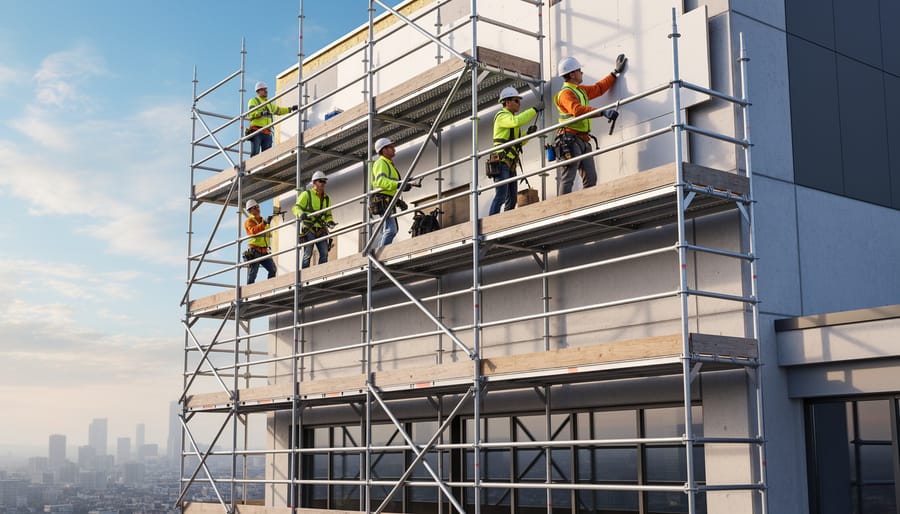
Scaffolding carries two distinct meanings depending on whether you’re standing in a classroom or on a construction site, yet both share a powerful underlying principle: providing structured, temporary support that allows people to reach heights they couldn’t achieve on their own.
In education, scaffolding refers to a teaching method where instructors offer targeted support to help students master new concepts or skills. Teachers break complex tasks into manageable steps, demonstrate techniques, provide prompts or resources, and then gradually remove that assistance as students gain confidence and capability. The goal is always independence, the scaffolding exists only long enough to bridge the gap between what a student can do now and what they’ll soon accomplish without help.
In construction, scaffolding describes the physical frameworks erected alongside buildings to give workers safe access to elevated work areas. These temporary structures support both people and materials during projects, then come down once the building can stand on its own. Contractors adjust the setup as work progresses, adding or removing platforms and supports based on current needs.
- Instructional Scaffolding
- Temporary, task-specific teaching strategies designed to bridge the gap between a student’s current ability and their potential mastery. This approach is rooted in Lev Vygotsky’s Zone of Proximal Development (ZPD).
- Zone of Proximal Development (ZPD)
- The learning space between what a student can do independently and what they can achieve with guidance from a teacher or more capable peer. Vygotsky’s theory forms the foundation for modern scaffolding techniques.
- Structural Support Systems
- Physical frameworks in construction that provide temporary access to elevated work areas while supporting workers and materials throughout a project. These systems are removed as the building becomes self-supporting.
The metaphor works because both applications follow the same arc: identify where help is needed, provide just enough support to enable progress, and remove the framework once it’s no longer necessary. The educational term borrowed from construction precisely because builders understood this principle first, you don’t leave scaffolding up forever, and you don’t build it stronger than the task requires.
How Educational Scaffolding Works

The ‘I Do, We Do, You Do’ Framework
The I do, We do, You do framework is the most widely used scaffolding model in modern classrooms. It breaks instruction into three clear phases that mirror how physical scaffolding gradually steps back as a structure gains strength.
In the “I do” phase, the teacher demonstrates the skill or concept while students observe. This might involve solving a math problem aloud, modeling how to annotate a text, or showing proper technique for a hands-on task. The teacher makes their thinking visible, explaining each decision and step.
The “We do” phase shifts to guided practice. Teacher and students work through examples together, with the instructor providing prompts, asking questions, and correcting mistakes in real time. This collaborative stage can include whole-class work or small groups tackling problems with teacher support. Students begin applying the skill but still have immediate help when they stumble.
Finally, “You do” represents independent practice. Students work alone, applying what they’ve learned without direct teacher intervention. The instructor monitors progress and provides feedback, but the scaffolding has been removed. This gradual release ensures students don’t face new material without support, yet they ultimately practice the skill independently, exactly like removing sections of scaffolding once the building can stand on its own.
Types of Scaffolding in Educational Settings
Teachers draw from a flexible toolkit of scaffolding instruments, each designed to support learners at different stages of skill development. These approaches range from structured instructional frameworks to hands-on tools and quick assessment checks that help educators gauge when students are ready for more independence.
The most widely recognized instruments include:
- Instructional frameworks like “I do, We do, You do” that sequence demonstration, guided practice, and independent work
- Organizational tools such as KWL charts (What I Know, Want to know, Learned) and graphic organizers that help students structure their thinking
- Formative assessments including exit tickets and checks for understanding that reveal whether support can be reduced
- Collaborative methods like group practice and peer support that distribute scaffolding across the classroom community
Beyond these standard tools, teachers often combine multiple instruments within a single lesson. A math teacher might use a worked example (modeling), then transition to a partially completed problem with hints (guided practice), and finally assign independent problems while circulating to offer just-in-time support. The key is matching the instrument to where each student sits in their zone of proximal development.
What matters isn’t the specific tool chosen, but whether it provides the right amount of temporary support. A fifth-grader learning essay structure might need a detailed outline template initially, then a simpler prompt list, and eventually just a reminder to check their thesis. The scaffolding shrinks as competence grows, much like construction scaffolding comes down floor by floor as a building nears completion.
Types of Construction Scaffolding Systems
Canadian construction sites rely on several distinct scaffolding systems, each designed to meet specific project requirements and site conditions. Choosing the right type depends on building height, access needs, duration of use, and the nature of the work being performed.
The most common systems contractors encounter include:
- Supported scaffolding (frame and tube-and-coupler systems), built from the ground up with vertical and horizontal support, ideal for building exteriors, masonry work, and projects requiring stable, long-term access to multiple levels.
- Suspended scaffolding, platforms hung from roof structures or overhead supports using ropes or cables, commonly used for high-rise facade work, window installation, and maintenance on tall buildings where ground-based systems are impractical.
- Mobile rolling scaffolding, freestanding towers mounted on casters, perfect for interior projects like drywall installation, ceiling work, and painting where crews need to move frequently across a floor.
- Specialty systems, custom configurations including cantilever scaffolding for areas with obstructions at ground level, and modular systems designed for unique architectural features or confined spaces.
Supported scaffolding remains the workhorse of most construction projects because it provides stable, secure access that can be configured to match nearly any building profile. Contractors typically select suspended systems when they need to work downward from a roof or when ground conditions prevent stable footing for traditional scaffolding. Rolling towers excel in environments where repositioning happens multiple times per shift, eliminating the setup and teardown time required with fixed systems. Understanding which system fits your project parameters ensures both efficiency and compliance with Canadian safety standards.
How Contractors and Educators Use Scaffolding
Educators and contractors both rely on scaffolding to support progress through complex tasks, though the execution looks quite different in a classroom versus on a job site.
Teachers use scaffolding to build student competency in deliberate stages. A math teacher introducing algebraic equations might first demonstrate problem-solving steps (the “I do” phase), then work through examples with the class while students contribute answers (the “We do” phase), and finally assign independent practice problems as students show readiness (the “You do” phase). Throughout this process, the teacher monitors understanding through quick checks, adjusts support based on individual needs, and removes guidance only when students demonstrate they can proceed alone. The scaffolding disappears once mastery is achieved, leaving students with self-sufficient skills they can apply independently.
Contractors apply similar principles when planning site access and work platforms. A supported scaffolding system provides safe, structured access to different building heights as construction progresses. Crews erect the framework before starting facade work, adjust platform levels as they move up the structure, and dismantle sections once work at that elevation is complete. The scaffolding adapts to each project phase, lower platforms for foundation tasks, upper levels for roofing, and comes down entirely when the building no longer requires external support. Ensuring all equipment meets Canadian standards keeps workers protected throughout this temporary support period.
Both professionals recognize that scaffolding succeeds only when properly matched to the task, continuously assessed for stability, and removed at the right moment.
The Shared Principles Behind Both Meanings
The educational metaphor works because both forms of scaffolding share fundamental principles of support and growth. Physical scaffolding on a construction site provides temporary, structured access to higher levels of a building, enabling workers to reach areas they couldn’t access safely on their own. It stays in place only as long as needed, then gets removed when the structure can stand independently. Instructional scaffolding operates identically: teachers build temporary frameworks that let students reach cognitive levels beyond their current ability, then dismantle that support as learners gain confidence and skill.
Safety runs through both applications. Contractors invest in scaffold ladder safety training and worksite first aid to protect workers while they master new tasks at height. Educators apply the same protective logic, creating safe learning environments where students can attempt challenging work without the risk of failure derailing their progress. Both systems acknowledge that reaching the next level requires structured support, not a leap into the unknown.
The metaphor also explains why contractors rent construction equipment for specific project phases rather than leaving scaffolding in place permanently, exactly how effective instruction works.
Frequently Asked Questions
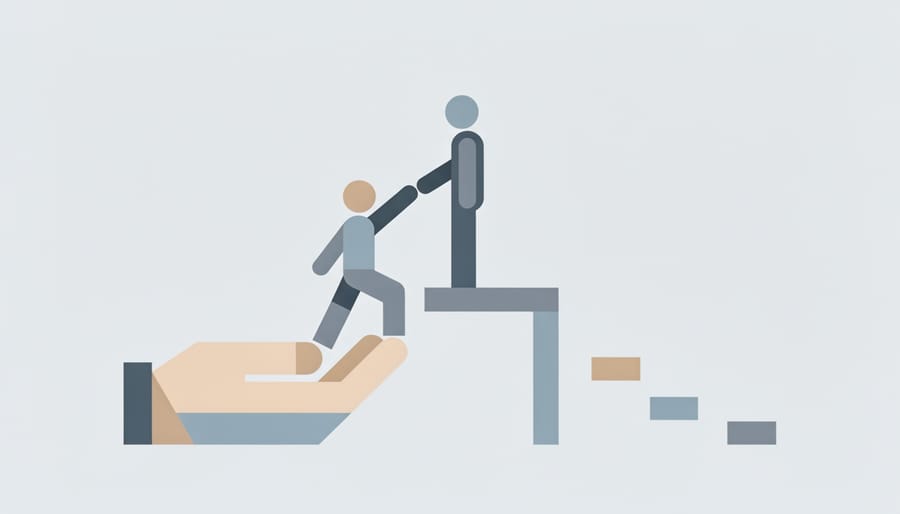
The questions below address the most common queries about scaffolding in both its educational and construction contexts.
What is scaffolding in education?
Scaffolding in education is a temporary instructional support that helps students learn new concepts or skills, with the teacher gradually reducing guidance as students become more proficient. It bridges the gap between a student’s current ability and their potential mastery.
How does the instructional scaffolding process work?
The process typically follows the “I do, We do, You do” framework: the teacher demonstrates a skill, then guides students through practice together, and finally allows students to work independently. Support decreases systematically as the student gains competence.
What is the difference between educational and construction scaffolding?
Construction scaffolding is a physical structure that supports workers and materials at height, while educational scaffolding is an instructional method that supports learning. Both provide temporary, structured support that is removed once the user achieves independence, either completing the building project or mastering the skill.
Where does the term instructional scaffolding come from?
The formal term instructional scaffolding is rooted in Lev Vygotsky’s Zone of Proximal Development theory and draws its name from the construction metaphor. Following the work of Montessori and Vygotsky, scaffolding was incorporated into many kinds of classrooms across different educational approaches.
These questions reflect the dual nature of the scaffolding concept and clarify why the same term applies across such different fields. Understanding both definitions helps contractors recognize the familiar principles of support and safety embedded in educational practice, while educators gain appreciation for the construction metaphor that shapes their instructional language.
Whether you’re guiding a student through a challenging concept or securing a team working three stories up, scaffolding provides the same essential service: structured, temporary support that makes progress possible. Understanding both meanings, educational and construction, reveals how thoughtfully designed systems enable people to reach new heights safely and confidently, then step back when they’re no longer needed. The metaphor works because the principles align so clearly: support where it’s needed, adapt as capability grows, and remove it once independence is achieved.
For contractors across Canada, Call A Contractor delivers the physical scaffolding your projects demand, along with comprehensive safety training that ensures your crews work with confidence at every elevation. We recognize that reliable equipment and expert guidance form the foundation of successful builds, just as effective scaffolding supports every stage of learning. When you need scaffolding systems that adapt to your project’s evolving needs, we’re here to provide the right solution.