
Selecting the right heavy construction equipment determines whether your project finishes on schedule and within budget. Understanding the full range of available machinery—from excavators and bulldozers to cranes and compactors—enables you to match specific equipment capabilities to project requirements, soil conditions, and site constraints.
The construction equipment landscape includes dozens of specialized machines, each designed for distinct tasks. Excavators handle digging and trenching, while loaders transport materials across job sites. Graders prepare roadbeds with precision leveling, and compactors ensure proper soil density for stable foundations. Cranes lift heavy materials to elevated work areas, and dump trucks move massive quantities of earth and debris. Recognizing which equipment suits your excavation, grading, paving, or demolition needs prevents costly delays and equipment mismatches.
Access to comprehensive equipment rental services provides flexibility for contractors managing multiple projects with varying equipment demands. Rather than investing capital in purchasing specialized machinery that sits idle between jobs, rental options deliver the right equipment exactly when needed. This approach reduces overhead costs while ensuring access to well-maintained, modern machines equipped with current safety features.
Project success depends on more than equipment availability—it requires operators who understand machine capabilities, safety protocols, and efficiency techniques. Partnering with providers who offer operator training and on-site support ensures your team maximizes equipment performance while maintaining the highest safety standards throughout every phase of construction.
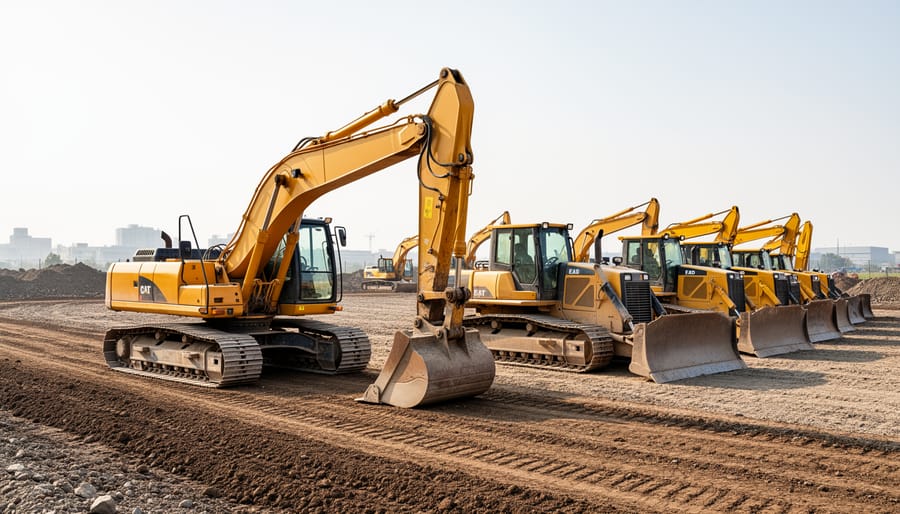
Earthmoving and Excavation Equipment
Excavators
Excavators are essential workhorses on construction sites across Canada, offering versatility for digging, trenching, demolition, and material handling. Understanding the different types available helps you select the right machine for your project requirements.
Compact excavators, weighing under 10,000 pounds, are ideal for residential projects, landscaping, and urban construction where space is limited. These maneuverable machines can navigate tight jobsites while delivering impressive digging power for utility work and foundation preparation.
Standard excavators, ranging from 10,000 to 90,000 pounds, handle most commercial and infrastructure projects. They provide the strength needed for deep excavations, heavy lifting, and high-volume earthmoving operations. These versatile machines excel in road construction, large-scale site development, and commercial building projects.
Long-reach excavators feature extended booms and arms, making them perfect for dredging, slope work, and projects requiring extended reach without repositioning. They’re particularly valuable for waterway maintenance and deep excavation applications.
Our team at Call A Contractor helps you navigate the full range of excavator rental options available for your specific project needs. We provide comprehensive safety training with every rental, ensuring your operators understand proper machine operation and site-specific protocols. Contact our customer support team to discuss which excavator configuration best matches your project scope and timeline.
Bulldozers
Bulldozers are powerful earthmoving machines essential for grading, land clearing, and pushing heavy materials across construction sites. These versatile workhorses feature a substantial metal blade mounted on the front, designed to push large quantities of soil, sand, rubble, and debris with exceptional force and precision.
The two primary types are crawler dozers and wheel dozers. Crawler dozers operate on continuous tracks, providing superior traction and stability on uneven terrain, muddy conditions, and steep slopes. They excel at heavy-duty pushing tasks and are ideal for large-scale earthmoving projects. Wheel dozers, equipped with large rubber tires, offer greater mobility and faster travel speeds on hard, flat surfaces, making them well-suited for projects requiring frequent repositioning between work areas.
Modern bulldozers range from compact models for residential projects to massive machines capable of moving hundreds of cubic yards per hour on major infrastructure developments. When selecting a bulldozer for your project, consider factors such as site conditions, material type, required blade capacity, and project duration. Our experienced team provides comprehensive support to help you choose the right dozer configuration, and we offer safety training to ensure your operators maximize both productivity and job site safety throughout your project.
Backhoe Loaders
Backhoe loaders rank among the most versatile pieces of heavy construction equipment available to Canadian contractors. These multi-functional machines combine a front-mounted loading bucket with a rear-mounted excavator arm, allowing operators to perform both digging and material handling tasks without switching equipment. This dual capability makes backhoe loaders particularly cost-effective for medium-scale projects where space and budget constraints require maximum equipment efficiency.
The typical backhoe loader excels in utility work, including trenching for water lines, electrical conduits, and telecommunications infrastructure. The excavator arm can dig trenches up to 14 feet deep, while the front loader efficiently moves materials, backfills excavations, and grades surfaces. This versatility proves invaluable for municipal projects, residential developments, and commercial site preparation.
Modern backhoe loaders feature enclosed cabs with climate control, improving operator comfort during extended work periods. Many models include extendable dipper arms and multiple bucket attachments, enhancing their adaptability across different job requirements.
When selecting a backhoe loader, consider the digging depth required, lifting capacity needed for your materials, and site accessibility. Our customer support team can help match your project specifications with the appropriate machine, and we provide comprehensive safety training to ensure your operators maximize both productivity and jobsite safety.
Material Handling and Lifting Equipment
Cranes
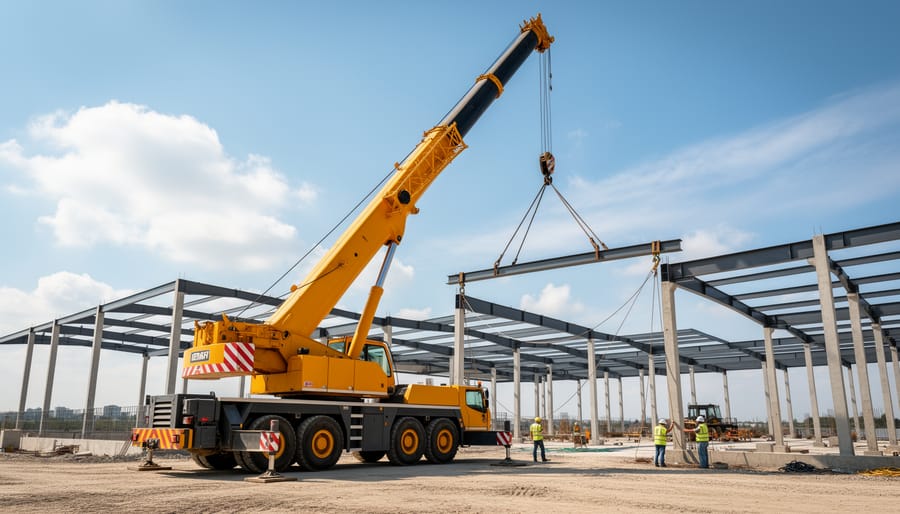
Cranes are essential lifting equipment for vertical construction, material handling, and heavy-duty placement tasks across diverse job sites. Understanding the different crane rental options available helps ensure you select the right equipment for your project’s specific demands and site conditions.
Mobile cranes offer exceptional versatility with lifting capacities ranging from 10 to 600+ tons. These self-propelled units can relocate around your site efficiently, making them ideal for projects requiring lifts at multiple locations. Their telescopic booms extend to reach varying heights while maintaining compliance with rated load requirements for safe operation.
Tower cranes excel in high-rise construction projects where sustained lifting capacity at significant heights is necessary. These stationary cranes provide lifting capacities up to 20 tons with heights exceeding 250 feet, requiring proper foundation preparation and careful site planning for installation.
Rough terrain cranes feature four-wheel drive and robust suspension systems designed for challenging ground conditions. With lifting capacities between 30 and 150 tons, they navigate uneven surfaces and limited-access areas where standard mobile cranes cannot operate effectively.
Our equipment rental specialists provide comprehensive safety training and ongoing customer support to ensure your team operates cranes efficiently while maintaining the highest safety standards throughout your project timeline.
Forklifts and Telehandlers
Forklifts and telehandlers are essential material handling equipment designed to lift, transport, and position heavy loads efficiently across your construction site. Standard forklifts excel in warehouse-style operations and materials yards, offering load capacities ranging from 3,000 to 36,000 pounds. Their compact design makes them ideal for organized staging areas where materials need frequent repositioning.
Telehandlers, also known as telescopic handlers, provide extended reach capabilities that standard forklifts cannot match. With telescoping booms extending 19 to 55 feet and lift capacities up to 12,000 pounds, these versatile machines can place materials on upper floors, reach over obstacles, and access difficult areas. Many telehandlers accept multiple attachments including pallet forks, buckets, and lifting jibs, transforming one machine into several specialized tools.
When selecting between forklifts and telehandlers, consider your site layout, required lift heights, and load weights. Our equipment specialists can help you determine the right capacity and reach for your specific project requirements. We provide comprehensive operator safety training with every rental, ensuring your team understands load charts, stability principles, and proper operating procedures. This support minimizes jobsite risks while maximizing productivity and equipment performance throughout your project timeline.
Wheel Loaders
Wheel loaders are versatile front-end loaders designed for efficiently moving bulk materials, loading trucks, and creating stockpiles on construction sites. These powerful machines feature a large front-mounted bucket that can scoop, lift, and transport materials like soil, gravel, sand, and demolition debris. When selecting a wheel loader, bucket capacity is a critical consideration, typically ranging from 1 to 13 cubic yards depending on the machine size and project requirements. Smaller compact wheel loaders work well in confined spaces and light-duty applications, while larger models handle heavy-volume material handling on major construction projects. Modern wheel loaders offer excellent maneuverability with articulated steering, making them ideal for loading dump trucks, feeding crushers, or managing material yards. Our team provides comprehensive support to help you choose the right wheel loader capacity for your project demands, along with operator safety training to ensure efficient and secure operation on your jobsite.
Grading and Compaction Equipment
Motor Graders
Motor graders are specialized machines designed for precision grading work in road construction, site preparation, and final surface finishing. Featuring a long adjustable blade positioned between front and rear axles, these machines create smooth, level surfaces with exceptional accuracy. Motor graders excel at fine grading operations, road maintenance, shoulder grading, and ditch cutting. Their ability to work at precise angles makes them essential for establishing proper drainage slopes and achieving exact grade specifications. Modern motor graders offer advanced blade control systems, allowing operators to maintain consistent accuracy across large project areas. These machines prove particularly valuable for highway construction, municipal road work, and large-scale site development where surface precision is critical. When selecting a motor grader for your project, consider the working width required, terrain conditions, and grade tolerances specified in your plans. Our team provides comprehensive operator training to ensure safe, efficient machine operation and optimal results. We support contractors throughout their projects with technical guidance and responsive customer service, helping you achieve superior grading outcomes while maintaining project schedules and budget requirements.
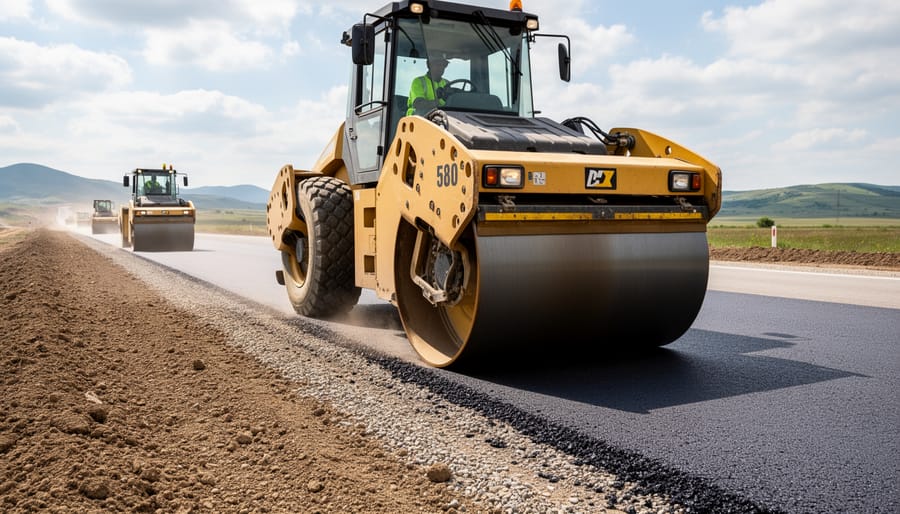
Compactors and Rollers
Compaction equipment plays a crucial role in creating stable foundations and durable surfaces across construction sites. Vibratory rollers are among the most versatile options, using high-frequency vibrations to compact granular soils, gravel, and asphalt efficiently. These machines come in various sizes, from small single-drum units ideal for driveways and pathways to large tandem rollers designed for highway construction.
Padfoot rollers feature protruding lugs or “feet” on the drum surface, making them particularly effective for compacting cohesive soils and clay materials. The concentrated pressure from these feet breaks up clumps and achieves deeper compaction layers, essential for building stable subgrades.
For smaller areas and confined spaces, plate compactors deliver powerful compaction in a portable package. These machines excel at preparing trenches, sidewalks, and other areas where larger equipment cannot operate effectively.
Selecting the right compactor depends on your soil type, moisture content, and project specifications. Our customer support team can help you identify the most suitable equipment for your specific application, and we provide comprehensive safety training to ensure your operators maximize both efficiency and workplace safety throughout your project.
Scrapers
Scrapers are powerful, self-loading earthmoving machines designed to efficiently move large volumes of material across medium to long distances on construction sites. These versatile machines combine cutting, loading, hauling, and dumping functions in a single unit, making them ideal for projects requiring mass excavation and land leveling. Scrapers work by lowering a cutting edge to shave off layers of soil, which collects in a bowl that can hold 10 to 40 cubic yards of material depending on the model. They excel in applications such as highway construction, dam building, airport development, and large-scale grading projects where material needs to be relocated several hundred feet or more. Modern scrapers come in two main configurations: self-propelled motor scrapers and pull-type scrapers that require a tractor for operation. When selecting scrapers for your project, consider the haul distance, material type, and terrain conditions to ensure optimal productivity and cost-effectiveness for your specific requirements.
Hauling and Transportation Equipment
Articulated Dump Trucks
Articulated dump trucks (ADTs) are purpose-built hauling machines engineered to transport heavy loads across challenging off-road terrain where conventional dump trucks cannot operate effectively. These powerful vehicles feature a unique articulated joint between the cab and dump body, providing exceptional maneuverability on steep grades, uneven surfaces, and muddy conditions commonly encountered on construction sites.
ADTs typically offer payload capacities ranging from 25 to 45 tons, with all-wheel drive systems and advanced suspension technology that maintains stability on rough ground. The articulated steering design allows operators to navigate tight spaces and challenging terrain while maintaining better traction compared to rigid-frame trucks. These machines excel in earthmoving projects, large-scale excavation work, mining operations, and infrastructure development where traditional haul roads are impractical or non-existent.
When selecting an ADT for your project, consider factors such as required payload capacity, site terrain conditions, haul distances, and operator experience levels. Our team provides comprehensive support to help you choose the right equipment configuration, along with professional safety training to ensure operators understand proper loading techniques, terrain navigation, and maintenance protocols for optimal performance and worksite safety.
Rigid Dump Trucks
Rigid dump trucks are essential hauling machines designed for large-scale mining and construction projects where maximum payload capacity is critical. Unlike articulated haulers, these trucks feature a fixed chassis and rigid frame, allowing them to transport 40 to 400 tons of material in a single load. Their robust construction and powerful engines make them ideal for quarries, open-pit mines, and major earthmoving operations.
These trucks excel in environments with well-maintained haul roads where their superior payload capacity outweighs the need for articulation. The elevated operator cab provides excellent visibility for safe maneuvering around busy job sites. Modern rigid dump trucks often include advanced features like automatic traction control and payload monitoring systems to optimize productivity.
When planning projects requiring rigid dump trucks, consider factors such as haul road conditions, loading equipment compatibility, and required daily tonnage. Our team provides comprehensive support to help you select the appropriate truck capacity for your specific application. We also offer safety training programs to ensure your operators maximize both efficiency and workplace safety when handling these high-capacity hauling vehicles.
Specialty Heavy Construction Equipment
Trenchers
Trenchers are specialized excavation machines designed to dig narrow, deep channels for installing underground utilities, drainage systems, cables, and pipelines. These machines come in various sizes, from compact walk-behind models ideal for residential cable installation to large ride-on trenchers that handle major utility projects requiring depths of several feet. Chain trenchers use a digging chain with cutting teeth for most soil conditions, while wheel trenchers feature a toothed metal wheel for cutting through harder surfaces like asphalt or rocky terrain. Modern trenchers offer adjustable depth controls and varying width capabilities to match specific project requirements. When selecting a trencher, consider the trench depth and width needed, soil conditions at your site, and whether you require portability for smaller residential jobs or power for commercial infrastructure projects. Our team provides comprehensive safety training on proper trencher operation, including techniques for avoiding underground utilities and maintaining stable trench walls. We’re here to help you choose the right trenching equipment and ensure your crew operates it safely and efficiently.
Pile Drivers and Drilling Rigs
Foundation work requires specialized equipment designed to create stable supports for large-scale structures. Pile drivers use powerful hydraulic or diesel hammers to drive steel, concrete, or timber piles deep into the ground, creating secure foundations for bridges, high-rises, and heavy infrastructure projects. These machines deliver controlled impacts that can reach depths exceeding 100 feet depending on soil conditions and project requirements.
Drilling rigs complement pile driving operations by creating boreholes for caisson foundations and ground stabilization work. Modern rotary drilling rigs offer precise depth control and can handle various soil types, from soft clay to bedrock. Track-mounted models provide stability on uneven terrain, while truck-mounted versions offer superior mobility between job sites.
Both equipment types demand experienced operators who understand soil mechanics and foundation engineering principles. Proper safety protocols are essential given the equipment’s power and the critical nature of foundation work. Our team provides comprehensive operator support and safety training to ensure your foundation projects meet engineering specifications while maintaining the highest safety standards throughout every phase of construction.
Demolition Equipment
Demolition projects require specialized equipment designed to safely and efficiently dismantle structures. Excavators equipped with hydraulic breakers deliver powerful impact force to break through concrete and reinforced materials. Wrecking balls, while less common today, remain effective for large-scale building demolition. High-reach demolition excavators extend 65 to 100 feet, allowing operators to safely dismantle tall structures from the ground level. Concrete crushers and pulverizers attach to excavators to reduce debris into manageable, recyclable materials on-site. For precision work, compact demolition robots navigate tight spaces and interior areas where traditional machinery cannot operate. Shears cut through steel beams and rebar cleanly, while grapples handle sorting and loading demolished materials. Our team provides comprehensive safety training specific to demolition equipment operation, ensuring your crew understands proper techniques and hazard management. We help you select the appropriate demolition tools based on your project scope, structural materials, and site constraints, backed by ongoing customer support throughout your rental period.
How to Choose the Right Heavy Equipment for Your Project
Selecting the right heavy equipment requires careful evaluation of multiple factors to ensure your project runs efficiently and safely. By following a systematic approach, you can match the appropriate machinery to your specific requirements while maximizing your investment.
- Define your project scope and objectives. Identify the specific tasks required, such as excavation depth, material type, lifting capacity, or grading precision. This clarity helps narrow down equipment categories that align with your project goals.
- Assess site conditions thoroughly. Evaluate terrain characteristics, space constraints, ground stability, and accessibility. Equipment suitable for open highway construction may not be ideal for confined urban sites or challenging soil conditions.
- Calculate your timeline and productivity needs. Determine whether you need equipment for short-term tasks or extended operations. Consider machine capacity and speed to ensure you meet project deadlines without overextending resources.
- Establish your budget parameters. Factor in rental rates, fuel consumption, operator costs, and potential maintenance expenses. Remember that selecting slightly larger or more efficient equipment may reduce overall project costs through improved productivity.
- Verify operator qualifications and training requirements. Ensure your team has the necessary certifications or arrange for safety training before equipment deployment. Proper operator skills directly impact efficiency and workplace safety.
- Consult with equipment specialists. Discuss your project requirements with experienced rental professionals who can recommend appropriate machinery based on their industry knowledge and equipment performance data.
Understanding these selection criteria helps prevent common pitfalls like equipment underutilization or operational bottlenecks. Consider seasonal factors unique to Canadian construction, including weather conditions that may affect equipment performance. Many rental providers offer comprehensive customer support to help you navigate these decisions, including on-site assessments and equipment demonstrations. Additionally, reputable companies provide detailed safety training programs to ensure your operators can maximize equipment capabilities while maintaining job site safety standards. Taking time to properly evaluate these factors leads to more successful project outcomes and better return on your equipment investment.
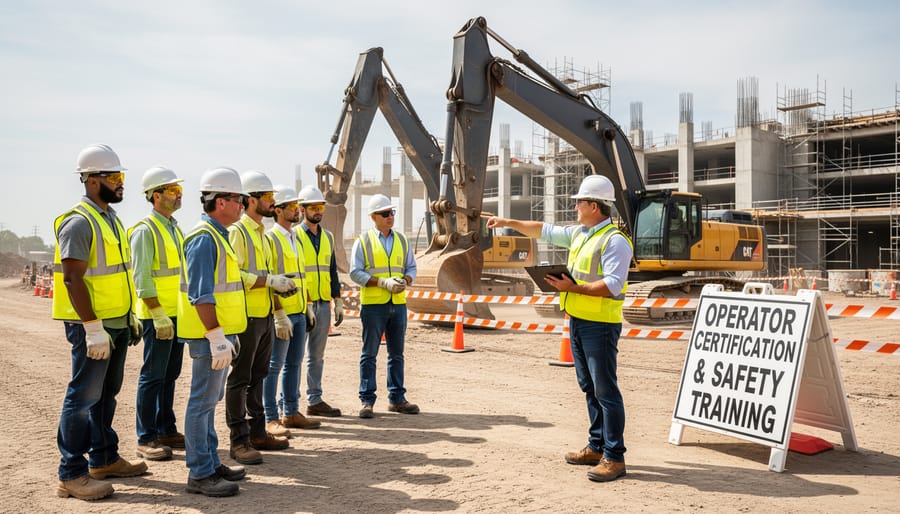
Operator Requirements and Safety Considerations
Operating heavy construction equipment requires qualified professionals who understand both the technical and safety aspects of these powerful machines. In Canada, operator certification is essential for ensuring workplace safety and compliance with provincial and territorial regulations. The certification requirements in Canada vary by jurisdiction, but generally include completing approved training programs and demonstrating competency through practical assessments.
Most provinces require operators to hold valid certificates for specific equipment types, such as mobile cranes, excavators, and forklifts. These credentials typically involve both classroom instruction and hands-on training under experienced supervisors. At Call A Contractor, we support our customers by providing comprehensive safety training resources and guidance on meeting regulatory standards, ensuring your operators are fully prepared before stepping onto the job site.
Canadian construction sites must adhere to federal safety regulations as well as provincial occupational health and safety legislation. Key safety considerations include conducting daily equipment inspections, maintaining proper communication protocols, establishing clear site traffic patterns, and ensuring all operators understand load capacity limits and stability requirements.
Best practices for safe equipment operation include conducting pre-start safety meetings, implementing comprehensive construction safety practices, maintaining clear sight lines around operating machinery, and establishing exclusion zones to protect ground personnel. Operators should always perform walk-around inspections, verify all safety systems are functioning, and report any equipment deficiencies immediately.
Our team at Call A Contractor is committed to supporting your safety initiatives by offering well-maintained equipment with current inspection records and providing ongoing technical support to address any operational questions your team may have throughout your project.
Understanding the full range of heavy construction equipment available is essential for planning and executing successful projects. From excavators and bulldozers to specialized machinery like trench compactors and telescopic handlers, each piece of equipment serves a specific purpose designed to increase efficiency and meet project deadlines. Whether you’re managing residential developments, commercial construction, or infrastructure projects, having access to the right equipment at the right time makes all the difference.
Choosing the right equipment is only part of the equation. Partnering with a reliable rental provider ensures you receive more than just machinery—you gain access to comprehensive customer support, technical assistance when challenges arise, and professional safety training for your operators. These services minimize downtime, reduce operational risks, and keep your project moving forward smoothly. A dependable rental partner understands the demands of the construction industry and provides flexible solutions tailored to your timeline and budget.
As you evaluate equipment options for your next project, consider providers who prioritize your success through responsive support teams, well-maintained equipment fleets, and thorough safety protocols. The right partnership transforms equipment rental from a simple transaction into a strategic advantage that contributes directly to your project’s efficiency, safety standards, and overall success.